Are you thinking about studying abroad? If that’s the case, Japan should definitely be on your list! Securing a Japanese student visa can open up a world filled with incredible educational experiences, a rich culture, cutting-edge technology, and a plethora of job opportunities. Studying in Japan could lead to possibilities you never even dreamed of. Whether you’re excited to learn the language, delve into innovative fields, or just soak in the vibrant atmosphere of this fantastic country, there’s so much to gain from an adventure studying abroad in Japan. Let’s jump into this article to explore everything Nepali students need to consider to apply for a Japanese Student Visa, which can help you reach your goals!
Why Studying in Japan: Unique Advantages for Nepali Students
Japan offers a fantastic blend of top-notch education and budget-friendly tuition, giving students the chance to dive into advanced technology while soaking up a vibrant culture. With great job prospects after graduation and a clear route to permanent residency, it’s no wonder that international students see Japan as the perfect place to boost their academic and career goals.
1. Affordable Tuition and Living Costs
Let’s be honest, money plays a big role in our decisions. When you look at Japan, it’s actually pretty affordable compared to a lot of Western countries. If you’re considering public universities, tuition usually falls between $4,800 and $10,800 a year. On top of that, there are plenty of part-time job opportunities that can help cover living costs while giving you some valuable local work experience. It’s a great deal! For private universities, you’re looking at costs ranging from $9,000 to $15,000 each year, while vocational schools typically charge between $6,000 and $10,000 annually. As for living expenses, they can differ depending on the city, but a good rule of thumb is to budget around $800 to $1,200 a month for rent, food, and other essentials.
2. World-Class Education Quality
Don’t think that cheaper means worse. Japan’s education system is top-notch. They’re always near the top in global education rankings. You’ll get a great education without breaking the bank. It’s about getting the best bang for your buck when you study in Japan.
3. Access to Cutting-Edge Technology
If you’re into tech, Japan is the place to be. They’re leaders in robotics, automation, and AI. You’ll get to see innovation up close and personal. It’s like stepping into the future.
Japan is really pushing the boundaries of what’s possible. You’ll be surrounded by new ideas and technologies, which is super inspiring. It’s a great place to learn and grow if you’re interested in tech.
4. Safety and Security for Students
Japan is famous for its impressively low crime rates and a safe atmosphere, which is a big advantage for international students. You can usually stroll around at night without feeling uneasy, which isn’t something you can say for every country. Of course, it’s always wise to stay aware of your surroundings, but in general, safety is a significant perk of studying in Japan. This sense of security lets you concentrate on your studies and truly enjoy your experience without the constant stress. Plus, it’s important to mention that the Japanese are typically very friendly and eager to help if you need directions or find yourself in a bit of a situation.
5.Cultural Insights: Learning Beyond the Classroom
Studying in Japan is so much more than just hitting the books and attending lectures; it’s an immersive experience that can truly change your perspective on life. You’ll gain skills and insights that extend far beyond the classroom, giving you a significant advantage in our interconnected world. It’s all about grasping the unspoken norms, honoring traditions, and mastering the art of communication in ways that foster connections rather than create barriers. This is where the real transformation occurs – where you evolve from a mere student into a globally conscious citizen.
6.Understanding Japanese Business Culture
Japanese business culture is built on respect, harmony, and long-term relationships. You’ll learn about concepts like ‘kaizen’ (continuous improvement) and ‘omotenashi’ (hospitality), which are deeply ingrained in the way businesses operate. Understanding these principles can give you a significant advantage when working with Japanese companies or in any global business environment. It’s about more than just closing deals; it’s about building trust and creating lasting partnerships.
Pathways To Apply for a Japanese Student Visa
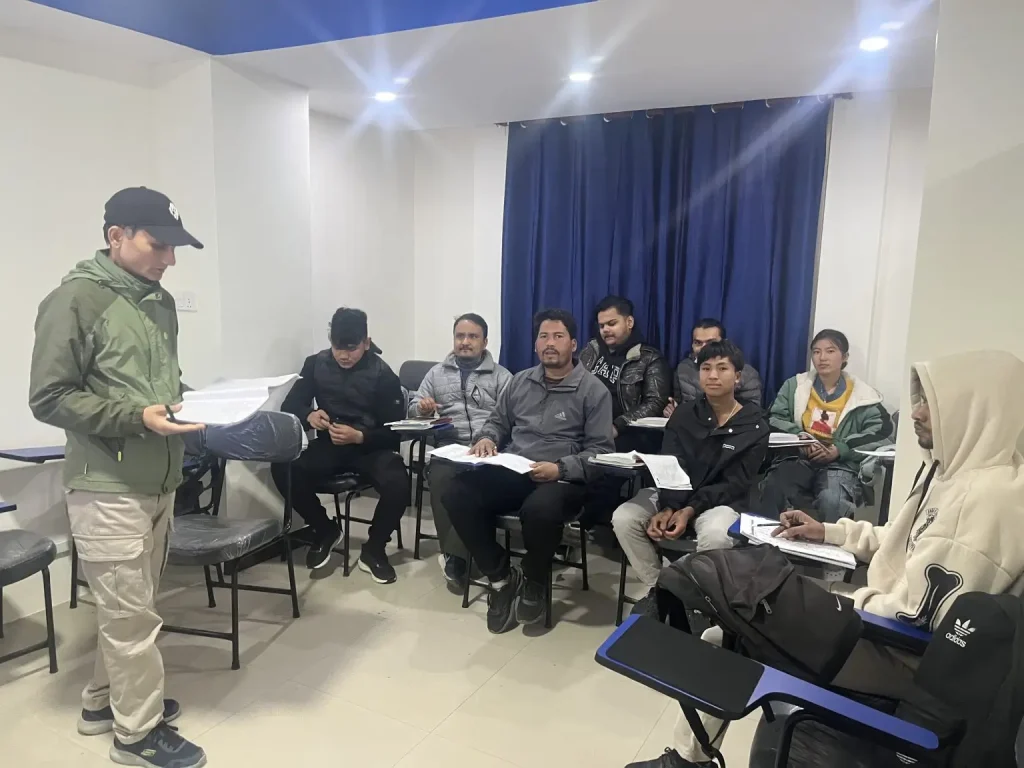
Many Nepali students first attend language classes and move to vocational schools (専門学校, senmon gakkō) to gain practical skills and improve their Japanese language abilities before applying to universities. This step-by-step approach can be beneficial for adjusting to the Japanese education system and culture.
1. Japanese Language Courses in Nepal
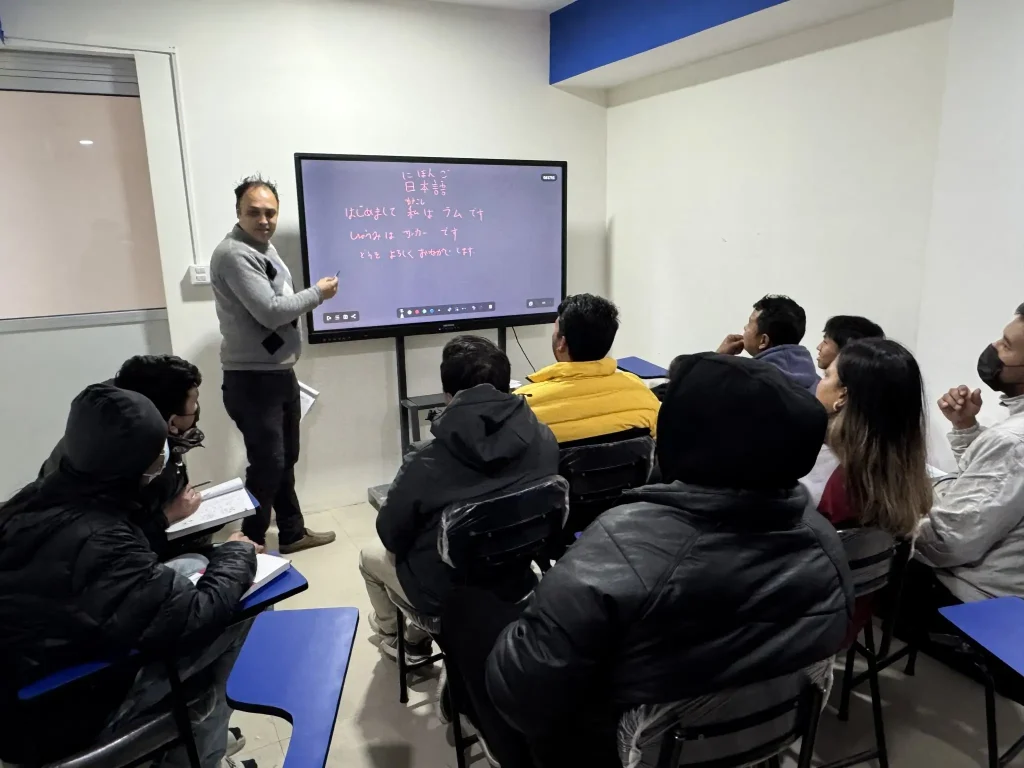
If you’re gearing up to study in Japan, one of the first things you should tackle is the Japanese language. Aiming for proficiency at the N5 level is key, as it’s the most basic tier of the Japanese Language Proficiency Test (JLPT). This level covers the essentials—grammar, vocabulary, and kanji—and serves as a stepping stone for anyone looking to live and study in Japan. To get ready, consider enrolling in classes that focus on all aspects of the language: listening, speaking, reading, and writing. Regular practice is a must, and it’s equally important to dive into the cultural nuances and etiquette of Japan. Many language courses are tailored to help students ace the JLPT N5 exam, or you might also look into the NAT-TEST, which is another well-recognized option for evaluating your Japanese skills. Both of these exams are crucial if you want to apply for a student visa or work part-time while in Japan. Additionally, getting to know the exam format and the types of questions you’ll encounter is vital. With dedicated study, practice tests, and consistent exposure to the language, you’ll be well on your way to passing the N5 level and building a solid foundation for your studies in Japan.
2. Vocational schools in Japan
- Often have less stringent Japanese language requirements initially
- Focus on practical skills that can lead to employment
- Generally have lower tuition fees than universities
- Provide a structured pathway to university education
- Offer specialized training in fields like IT, hospitality, and engineering
- Can help students acclimate to Japanese society and education system
What is the duration of vocational school programs?
Vocational school programs typically last 1-3 years:
- 1-year programs: Short certificates in specific skills
- 2-year programs: Most common, resulting in a diploma (専門士, senmonshi)
- 3-year programs: Advanced diplomas (高度専門士, kōdo senmonshi)
What are the advantages of the vocational school pathway for Nepali students?
- Easier adjustment to Japanese language and culture
- More affordable initial investment
- Practical skills that can lead to part-time work opportunities
- Pathway to university
What should I consider when selecting a school?
- Location (urban vs. rural areas affect living costs and job opportunities)
- School reputation and accreditation
- Support services for international students
- Connections to industry for internships and job placement
- Scholarship opportunities
- English support availability
3. University Programs in Japan
- Undergraduate (Bachelor’s): 4 years (some medical programs are 6 years)
- Master’s: 2 years
- Doctoral: 3+ years
What popular fields of study do Nepali students pursue in Japan?
- Information Technology and Computer Science
- Business Administration and Management
- Engineering (particularly mechanical and electrical)
- Tourism and Hospitality
- Healthcare and Nursing
- Agriculture and Food Technology
How to choose Your Educational path?
- Your personal interests and strengths
- Career opportunities in both Japan and Nepal
- Growth sectors in the Japanese economy (IT, healthcare, tourism, manufacturing)
- Scholarship availability for specific fields
- Your long-term goals for living and working internationally
What scholarships are available for Nepali students?
- MEXT (Japanese Government) Scholarships
- JASSO (Japan Student Services Organization) Scholarships
- Private foundation scholarships
- University-specific scholarships
- Nepal-Japan bilateral exchange scholarships
Can I go directly to a Japanese university without attending vocational school?
Yes, Nepali students can apply directly to Japanese universities if they meet the entry requirements, which typically include:
- Completed 12 years of formal education
- Japanese Language Proficiency Test (JLPT) certification (typically N2 or higher for Japanese-taught programs)
- EJU (Examination for Japanese University Admission for International Students) results
- English proficiency (for English-taught programs)
How do I choose between vocational school and university?
Consider:
- Your career goals and whether they require academic credentials or practical skills
- Your Japanese language ability
- Your financial situation
- The time you’re willing to invest in education
- Whether you want to work in Japan after graduation
Japan Academic Intake Guide for Students
January Intake
- University:
- Winter intake with limited program availability
- Recommended for Japanese language preparation courses
- Vocational School:
- January intake available for select 1.5-year programs
- Primarily offers Japanese language courses
- Course Durations:
• Language schools: 1–2 years
• Vocational certificates: 1–2 years - Application Deadlines: August–September (previous year)
April Intake
- University:
- Main intake for most programs (undergraduate/graduate)
- Pleasant arrival during cherry blossom season
- Vocational School:
- Major intake with widest program variety
- Best scholarship opportunities for Nepali students
- Course Durations:
• University degrees: 4 years
• Vocational diplomas : 2 years
• Advanced diplomas : 3–4 years
• Technical certifications: 1–2 years - Application Deadlines: September–November (previous year)
July Intake
- University:
- Summer intake for short-term/language courses
- Ideal for exchange programs (e.g., summer schools)
- Vocational School:
- Limited vocational programs (short courses)
- Focus on IT/hospitality certifications and intensive language training
- Course Durations:
• Short certificates: 3–6 months
• Summer intensive courses: 1–3 months
• Language prep: 6 months - Application Deadlines: January–February (same year)
October Intake
- University:
- Second major intake (especially graduate programs)
- Cultural festivals and mild weather
- Vocational School:
- Popular intake for IT/engineering/healthcare programs
- Second-best scholarship window for Nepali students
- Course Durations:
• Vocational diplomas: 1.5–2 years
• Advanced technical programs: 2–3 years
• Language prep: 1–1.5 years - Application Deadlines: March–May (same year)
Working while studying in Japan
Yes, international students in Japan are permitted to work part-time; however, they must obtain a “Permission to Engage in Activity Other Than That Permitted under the Status of Residence Previously Granted” from the immigration office.Once this permit is granted, students can work up to 28 hours per week during academic terms. During official school holidays, such as summer and winter breaks, they may work full-time, up to 8 hours per day.
It’s also crucial to remember that these work hour limits apply to all jobs combined. So, if a student has two part-time gigs, the total hours shouldn’t go over 28 per week during the academic term. Plus, there are certain jobs they can’t take on. For instance, students aren’t allowed to work in the adult entertainment sector, which includes nightclubs, bars, and gambling venues. Breaking these rules can lead to serious issues, like fines, losing their visa, or even deportation.
Visa requirements for Nepali Students
- Valid passport
- Certificate of Eligibility (applied for by your school)
- Proof of financial stability (typically showing funds equivalent to one year’s expenses)
- Admission letter from Japanese institution
- Academic transcripts and certificates
- Japanese or English language proficiency proof
How to Book a Japan Visa Appointment from Nepal in 2025
If you’re traveling to Japan from Nepal in 2025, here’s how you can book your visa:
1. Certificate of Eligibility (COE)
The COE is required for long-term stays (work, study, or dependent visas). It’s provided by the Japanese Immigration Bureau.
Validity: COE is valid for three months.
Application: Must be applied for by a sponsor in Japan (school or employer).
2. Booking a Visa Appointment
Visit the VFS Global website to select your visa type and schedule an appointment.
Complete the visa application form and get the required documents ready like your passport, photographs, and financial proof.
Appear at the VFS Global center for the appointment.
3. Required Documents
Visa application form, valid passport, photographs (4cm x 3cm), travel itinerary, and financial proof.
For COE-based visas, include the original or copy of the COE.
4. Visa Fees & Processing Time
Visa Fees:
Single entry: NPR 2,860
Multiple entry: NPR 5,710
Transit: NPR 670
Processing time is typically 6 working days. Apply in advance, especially during peak seasons.
5. Tips for Success
Keep yourself informed by visiting VFS Global and Japanese Embassy websites.
Apply in advance to secure an appointment and to prevent delays.
Ensure your documents are correct and complete.
For more information, visit VFS Global and the Embassy of Japan in Nepal.
Opportunities in Japan after Graduations
After graduating, students can apply for a designated activities visa for job hunting (valid for 6 months, renewable once). With a job offer, graduates can transition to work visas in their field of expertise. Japan has also introduced the “Specified Skilled Worker” visa program for various fields.
1.Internships with Global Corporations
Japan is a hub for some of the most powerful global corporations out there. Securing an internship with giants like Sony or Toyota can really give your resume a major lift. These opportunities offer you hands-on experience with the latest technologies and a glimpse into international business practices. Just think about it—working on projects that are transforming entire industries! It’s a fantastic way to pick up essential skills and build connections that could really advance your career.
2.Exposure to Advanced Research
Japan stands out as a powerhouse in research and development, pouring resources into cutting-edge fields such as AI, robotics, and biotechnology. Students benefit from top-notch facilities and get the chance to collaborate with some of the brightest minds in the industry. The Japanese government is also stepping up, channeling substantial funds into its semiconductor and AI sectors. This strong commitment opens doors for students to engage in pioneering research projects and play a role in driving technological progress. For instance, in 2022, Japan allocated around $138 billion to research and development. This unwavering focus on innovation fosters an environment ripe for discovery and advancement.
3.Sustainable Work Environments
Japan is seriously considering how to make work sustainable for the long run. It’s not just about the bottom line; it’s about taking care of people and the planet. Companies are beginning to prioritize reducing waste, using resources wisely, and fostering work environments that promote employees’ health and well-being. This isn’t just a passing trend; it’s becoming a fundamental aspect of how businesses in Japan function. They’re working on building sustainable models for the future.
4.Integration of Technology and Tradition
Japan is known for its tech, but it also values its traditions. The cool thing is how they’re blending the two in the workplace. You see robots and AI helping with tasks, but there’s still a big emphasis on human connection and craftsmanship. It’s like they’re using technology to enhance what people do best, not replace them. This balance is creating some really interesting and innovative work environments. For example, Pepper robots in hospitals.
Employee Benefits in Japanese Companies
- Average Monthly Salaries: As of 2025, full-time workers have secured average wage increases of 5.37%, with part-timers seeing a 6.53% rise. Major companies like Hitachi and Toyota have agreed to substantial wage hikes, with Hitachi confirming a record 6.2% monthly increase and Toyota offering up to ¥24,450 monthly, plus a bonus equivalent to 7.6 months’ salary.
- Employee Benefits:
- Paid Leave: Employees are entitled to annual paid leave, with the minimum starting at ten days after six months of service, increasing with tenure.
- Overtime Regulations: The standard workweek is 40 hours, with strict limits on overtime to prevent overwork, including a cap of 100 hours per month during peak periods.
- Parental and Family Leave: Generous maternity and paternity leave policies are in place, along with child care and family care leave to support work-life balance.
- Medical and Housing Benefits:
- Health Insurance: Employers provide comprehensive health insurance covering medical expenses, with premiums shared between employer and employee.
- Housing Assistance: Many companies offer housing allowances or provide company housing to support employees’ living arrangements.
- Retirement and Other Perks:
- Retirement Plans: Employers typically offer retirement benefits, including employer-matched contributions to pension plans.
- Additional Perks: Benefits may include subsidized meals, transportation allowances, and support for continuous professional development through training and education programs.
These elements come together to create a supportive and well-structured work environment in Japan, where fair pay, work-life balance, and a strong focus on employee well-being are key. Japanese companies are beginning to understand that when employees are happy and healthy, they tend to be more productive. They’re putting their money where their mouth is by investing in flexible work options, mental health resources, and initiatives that encourage a healthy work-life balance. It’s not just about grinding away; it’s about working smart and taking care of yourself. This positive change is making Japan a desirable destination for those who prioritize their well-being. Employee well-being is truly becoming a top priority. Japan’s vision for the future of work revolves around striking the right balance. It’s about leveraging technology to enhance the workplace while still cherishing the value of people and traditions. The goal is to create work environments that are not only efficient but also sustainable and nurturing for employee well-being. Here are some ways companies are prioritizing employee well-being: – Offering flexible hours and options for remote work. – Providing access to mental health resources and counseling services. – Encouraging employees to take breaks and focus on their health.
Final Thoughts on Studying in Japan
So, if you’re thinking about studying in Japan, now’s the time to jump in. With its mix of affordable education, top-notch universities, and a chance to dive into a unique culture, it’s hard to pass up. Plus, the connections you’ll make and the experiences you’ll have can really set you apart in the job market. Whether you’re into tech, business, or just want to explore a new way of life, Japan has something for everyone. Don’t let this chance slip by—2025 could be your year to shine in the land of the rising sun!