Have you ever dreamed of learning Japanese in Nepal, studying at a Japanese university, or working in Japan? Now, imagine trying to navigate the train system, order food, or ask for directions without knowing the language while you’re in Japan. That sounds difficult, doesn’t it? Speaking to your boss, understanding answers from colleagues, or communicating with teachers in Japan would be even more challenging when you’re pursuing your studies or career there, knowing Japanese is a must. A profound understanding of the language will enable you to interact with the locals and read signs. It also enables you to interact freely with teachers and employers, leading to better and more effective communication.
Your reasons for leaning Japanese should not just be for self-sustaining purposes, but for also maximizing your experiences in Japan. Efforts to speak the language, even if its basic, stands out and you will discover that people are more warmhearted and willing to lend a hand. This is particularly true for those in the countryside where English is less popular. Also, being able to speak effortless takes the difficulty out of everyday life and makes you feel more relaxed. Discover a comprehensive guide to learning Japanese in Nepal, including details on exams, recommended courses, and effective study tips. Start your Japanese language journey today!
Why Japanese Language Matters?
Learning Japanese is more than just acquiring a new skill—it’s a gateway to a world of cultural exploration, academic advancement, and professional growth. Japanese language proficiency protects against ineffective communication in all Japanese-speaking environments. Mastering Japanese opens doors to study opportunities in Japan, lucrative career prospects with Japanese companies, and a deeper understanding of one of the world’s most fascinating cultures.
To prove your Japanese language proficiency, you must take exams that assess your ability to communicate in a Japanese-speaking environment. These assessments include the JLPT (Japanese-Language Proficiency Test), NAT-TEST, and JFT, which serve as key gateways to various opportunities in Japan, such as studying at Japanese universities, securing high-level jobs with Japanese companies, or even applying for immigration. The examination has five levels (N5 to N1), with N5 being the beginner level, N4 basic understanding, N3 intermediate level of skills, N2 a fairly very good command of Japanese, and N1 almost perfect. It involves learning vocabulary, grammar, kanji work, comprehension, and of course, mock tests to measure one’s progress and fine-tune skills for specific levels.
Exploring Japanese Language Courses in Nepal
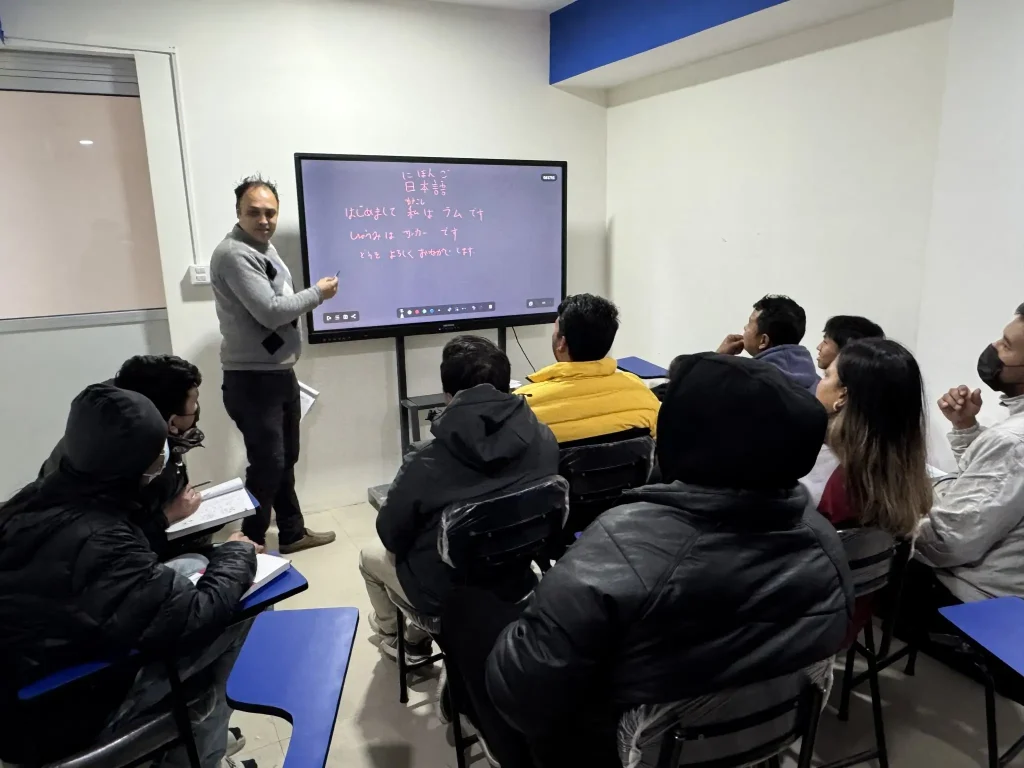
So, you’re thinking about learning Japanese in Nepal? Awesome! There are a bunch of japanese language courses available in Nepal, each designed to get you to a different level of fluency. Whether you’re starting with the basics (N5) or looking to advance your skills to N4 and beyond, there’s a course for you. There are many institues in Nepal, here to guide you through every step of the way with their personalized lessons designed to help you master grammar, vocabulary, and conversational skills at your own pace.
Key Japanese Language Exams in Nepal: What You Need to Know
To assess your Japanese language skills in Nepal, you’ll need to take one or more proficiency exams. These exams not only measure your knowledge of the language but also serve as credentials for studying and working in Japan. Here are the most common exams to take after you have prepared for the Japanese language in Nepal:
1. Japanese-Language Proficiency Test (JLPT)
The JLPT is the most widely recognized Japanese language qualification worldwide, with five proficiency levels.
- Structure: 5 levels (N1-N5); three sections (Grammar/Vocabulary, Reading, Listening)
- Administration: Held twice yearly (July and December); test duration 105-170 minutes
- Scoring: Scaled scoring (0-180 points); N1: 100+, N2: 90+, N3: 95+, N4/N5: 80+
- Content: Multiple-choice format; higher levels feature complex grammar and longer passages
- Recognition: Recognized by 90%+ of employers and universities; standard for academic/professional purposes
- Testing Frequency: Administered bi-annually in July and December in Nepal.
- Passing Requirements: Both overall and sectional scores required.
- N5: 80/180 overall, 38 in Vocabulary, 19 in Grammar & Reading, 19 in Listening.
- N4: 90/180 overall, 38 in Vocabulary, 19 in Grammar & Reading, 19 in Listening.
- N3: 95/180 overall, 19 in each section.
- N2: 90/180 overall, 19 in each section.
- N1: 100/180 overall, 19 in each section.
- Career Benefits: Useful for university admissions, job applications, and visa purposes.
Beginner Level Courses: N5 and N4
These courses are your starting point. N5 is the most basic level, and N4 builds on that foundation. You’ll learn basic grammar, vocabulary, and simple conversational phrases. Think of it as learning the alphabet and how to form simple sentences. These courses usually cover:
- Basic greetings and introductions
- Numbers, dates, and time
- Simple sentence structures
- Essential vocabulary for daily life
Intermediate Level Courses: N3
Once you’ve mastered the basics, N3 is where things get more interesting. This level focuses on expanding your vocabulary and grammar knowledge, allowing you to understand more complex conversations and texts. You’ll start to delve into more nuanced expressions and be able to express yourself with greater accuracy. Expect to cover:
- More complex grammar patterns
- A wider range of vocabulary
- Reading comprehension of longer texts
- Listening comprehension of natural-speed conversations
N3 is a great level to aim for if you want to work or study in Japan, as it demonstrates a solid foundation in the language.
Advanced Level Courses: N2 & N1
N2 & N1 is a serious commitment. This level is for those who want to achieve a high level of fluency and be able to communicate effectively in a wide range of situations. You’ll be able to understand complex texts, participate in detailed conversations, and even follow news and current events. The curriculum typically includes:
- Advanced grammar and vocabulary
- Reading comprehension of complex articles and essays
- Listening comprehension of nuanced dialogue
- Writing skills for formal and informal communication
It’s a challenging level, but the rewards are significant. Achieving N2 & N11 opens doors to many career opportunities and allows you to fully immerse yourself in Japanese culture.
2. NAT-TEST
- Structure: 5 levels (Q1-Q5) directly corresponding to JLPT levels
- Administration: Offered 6+ times per year; test duration 110-160 minutes
- Scoring: 900-point maximum scale; Q1: 600+, Q2: 500+, Q3: 450+, Q4: 400+, Q5: 350+
- Content: Similar to JLPT but emphasizes practical language skills; includes business content
- Recognition: Gaining popularity but less established than JLPT; accepted by select institutions
- Employment Focused: Tailored for individuals applying for work visas.
- Frequent Testing: Multiple test dates available throughout the year.
- Practical Skills: Tests job-related vocabulary and communication for technical and industrial sectors.
- Immigration Approved: Recognized by Japanese authorities for visa applications.
- Flexible Scheduling: More frequent dates than JLPT for timely visa processing.
- Industry-Relevant: Emphasizes terminology and workplace communication.
- Strategic Career Move: Essential for those seeking technical jobs in Japan.
3. Japanese Foundation Test (JFT)
The JFT assesses practical Japanese skills for daily life and work scenarios in Japan.
- Structure: Single-level computer-based test with 4 sections (Vocabulary, Grammar, Listening, Reading)
- Administration: Multiple sessions year-round; 60-minute duration; immediate results
- Scoring: 10-250 point scale; 200+ required to pass; no sectional minimums
- Content: 60 questions focused on workplace communication and practical scenarios
- Recognition: Mandatory specifically for Specified Skilled Worker visa applicants in certain industries
- Everyday Practicality: Focuses on language skills needed for real-life interactions.
- Testing Frequency: Available several times throughout the year in Nepal.
- Living in Japan Focus: Emphasizes communication for daily life, such as shopping, transportation, and healthcare.
- Balanced Assessment: Includes both formal and informal language use.
- Cultural Competence: Prepares candidates for cultural and social integration in Japan.
- Immigration Approved: Results accepted for specific visa categories.
- Functional Proficiency: Prioritizes practical communication over academic knowledge.
JLPT, NAT, and JFT Japanese Language Exams: Key Differences
JLPT (Japanese Language Proficiency Test)
- Structure: 5 levels (N5-N1); 3 sections (grammar, reading, listening)
- Frequency: 2 times yearly (July and December)
- Scoring: Scaled scoring system; sectional minimums required; scores range by level
- Content: Comprehensive assessment with increased complexity at higher levels
- Recognition: Recognized by 90%+ of Japanese employers and universities
NAT-TEST
- Structure: 5 levels (Q5-Q1) corresponding to JLPT levels; 3 core sections
- Frequency: 6+ times per year
- Scoring: Requires meeting both sectional pass marks and overall threshold
- Content: Similar to JLPT with more emphasis on practical language application
- Recognition: Accepted by select employers and language schools in Japan
JFT-Basic (Japan Foundation Test)
- Structure: 1 level only; computer-based test with 4 sections
- Frequency: Multiple sessions available throughout the year
- Scoring: 10-250 point scale; 200+ points required to pass
- Content: Focuses on basic communication for workplace situations
- Recognition: Required specifically for Specified Skilled Worker visa applicants
Effective Strategies to Prepare for Japanese Language Exams, Study Tips
Effective strategies is needed for learning Japanese language in Nepal can make all the difference, especially when you’re balancing the demands of daily life in a country like Nepal. Whether you’re a mom, a college student, or juggling office work, learning Japanese language requires focus and time management. From setting realistic study goals to finding the right resources, making the most of your time is crucial. With dedication and the right strategies, you can excel in your Japanese exams, opening doors to new opportunities in Japan—especially for Nepali individuals willing to learn the Japanese language.
1. Set a Structured Study Plan
- Consistency is Key: Dedicate a set amount of time each day to studying. Even 30 minutes of focused study every day yields better results than long, irregular study sessions. Consider creating a weekly schedule that allocates specific time blocks to different language skills to ensure balanced preparation.
- Prioritize Weak Areas: Focus on areas where you struggle the most, whether it’s kanji, grammar, or listening comprehension. Regularly assess your weaknesses.Tracking your performance across different skills (reading, listening, grammar, vocabulary) allows you to allocate your limited study time more efficiently. Remember that improving your weakest areas often yields the greatest overall score increases.
2. Take Mock Exams
- Simulate Real Exam Conditions: Mock exams help you get familiar with the exam format and time constraints. Treat each mock test as the real thing—time yourself, minimize distractions, and review your answers afterward.
- Identify Patterns: Analyze your mock exam results to pinpoint patterns in your mistakes. Adjust your study plan accordingly to improve your performance.
3. Use Flashcards for Vocabulary
- Digital Flashcards: Apps like Anki or Quizlet use spaced repetition to enhance your memory retention. Create flashcards for kanji, vocabulary, and grammar structures.
- Regular Review: Consistency in reviewing your flashcards ensures you don’t forget key vocabulary and grammar points.
4. Immerse Yourself in Japanese Culture
- Consume Japanese Media: Supplement your formal studies with Japanese films, TV shows, anime, and music. This helps you internalize natural speech patterns and increases your listening comprehension.
- Engage with Native Speakers: Practice speaking with language exchange partners or in conversation groups. Even if you’re preparing for written exams, regular speaking practice will build your confidence.
5. Practice Stress Management Techniques
- Stay Calm Under Pressure: Exam anxiety can affect your performance. Manage your stress by ensuring adequate sleep, eating healthy meals, and exercising regularly.
- Relaxation Techniques: Practice deep breathing, meditation, or yoga to keep your mind calm and focused.
Additional Tips for Success
- Take Japanese Language Classes: Enroll in reputable Japanese language courses that focus on exam preparation. Institutions like ours, Connect Japan Educational Consultancy offer structured courses.
- Review Past Papers: Go through previous years’ exam papers to understand the question patterns and structure.
- Use Online Resources: Websites like JLPT Sensei or Nihongo-Pro offer valuable practice tests, tips, and study materials tailored to different exam levels.